Category: Uncategorised
-
The Placement That Broke Me — and Rebuilt Me
When I began my Diploma in Professional Studies placement in Interior Design, I walked in with one question in my mind:
How can I be valuable to them?
I didn’t think about what I needed. I didn’t think about whether the company would be right for me. I thought only about how I could contribute, impress, and prove myself.
I wanted to be beneficial to my employer. I wanted to show that I was hardworking, committed, and capable.
What I didn’t expect was that this year would teach me more about self-worth than about design.
The Beginning: Hope and Pressure
Like many interns, I entered the placement slightly unsure but eager. I was new to professional practice. I was learning. That is what internships are for ,to learn, to develop, to make mistakes safely.
But from early on, something felt off.
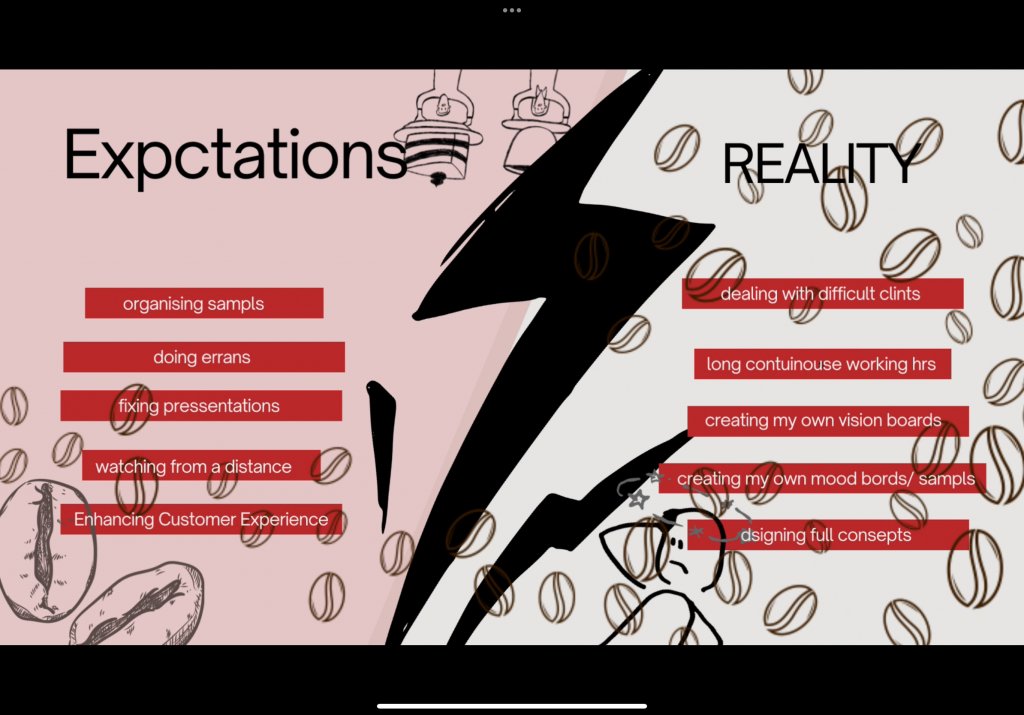
I was told my time management wasn’t strong enough. That I wasn’t working independently enough. That tasks weren’t being completed to the expected level.
Yet I was punctual. Often, I arrived before the shop even opened. I showed up consistently. I tried to absorb everything.
When I was given four hours to research and develop creative concepts — as someone still new, still figuring things out — it felt overwhelming. Research takes time. Creativity takes time. Learning takes time.
Especially when you are still understanding what you are doing.
I began to question myself constantly.
Was I too slow?
Was I not good enough?
Was I failing at something everyone else found easy?The Shock of Being Let Go
Then, without what felt like a clear opportunity to improve, I was fired.
There was no structured feedback plan. No step-by-step guidance on how to improve. No “let’s try again.” No real conversation about development.
Just an ending.
I felt betrayed. I felt blindsided. I felt like I had been made out to be incompetent almost foolish , instead of inexperienced.
The hardest part wasn’t losing the job.
It was feeling like I had not been given the chance to grow.
What They Didn’t See
They didn’t see the mental pressure of balancing part-time work alongside placement.
They didn’t see the exhaustion of trying to meet expectations while still learning from scratch.
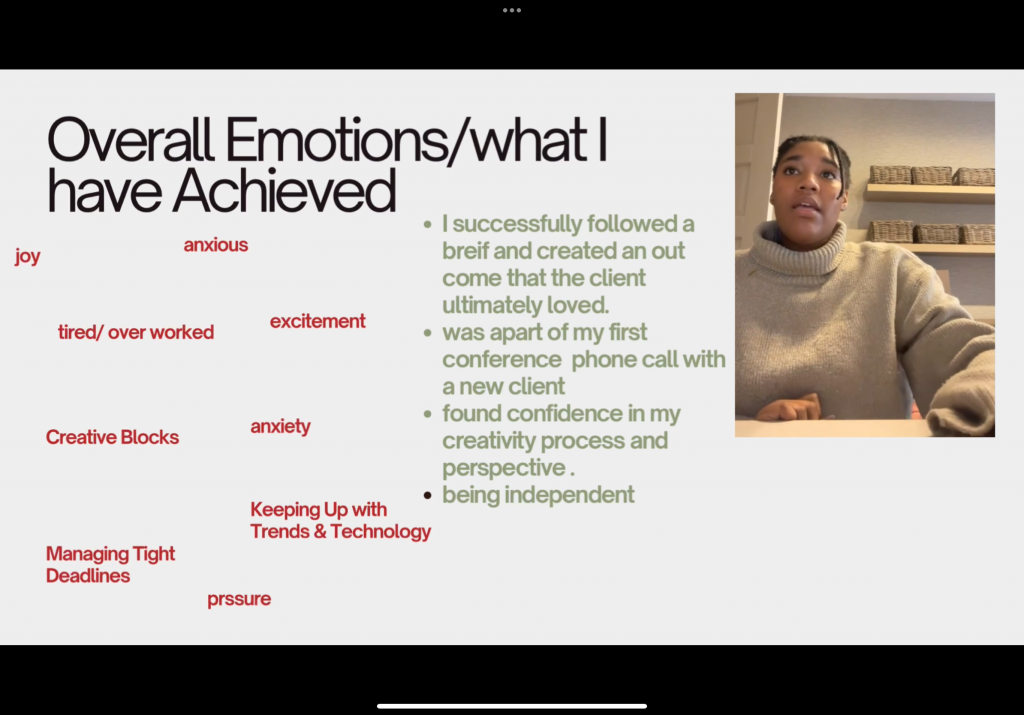
They didn’t see the anxiety of wanting to do everything perfectly.
Balancing work life and part-time employment is extremely difficult. Sometimes it is not fully in your control. When you feel overwhelmed, there is only so much you can do — reduce hours, sacrifice rest, push yourself harder.
But pushing yourself harder does not always produce better creativity. Sometimes it produces burnout.
And burnout looks like “poor time management” from the outside.
The Lesson I Didn’t Expect
For a while, I internalised everything. I thought maybe I truly wasn’t capable.
But reflection changed that.
The biggest lesson I learned was this:
Communication is everything.
If something feels unclear, confirm it in writing.
If expectations are vague, ask for specifics.
If feedback is general, ask for measurable examples.
If something doesn’t feel right document it!Send that reaffirming email. Clarify your tasks. Clarify deadlines. Clarify what “good” looks like.
Silence can cost you.
A Shift in Values
At the beginning of my DPS year, I believed something very strongly:
I am beneath the employer. I must prove my worth.
Now I see it differently.
Yes, there is hierarchy in companies. But workflow depends on employees. Designers, interns, assistants — we are the backbone of creative production.
Without employees producing thoughtful work, there is no business.
So why did I think so little of myself?
Why did I believe I should simply accept everything without question?
This experience changed my values.
I no longer believe that being an employee means shrinking yourself.
I no longer believe that being new means accepting poor communication.
I no longer believe that hierarchy equals superiority.Good companies grow their people. They guide them. They correct them constructively. They don’t leave them in the dark.
-
My Values
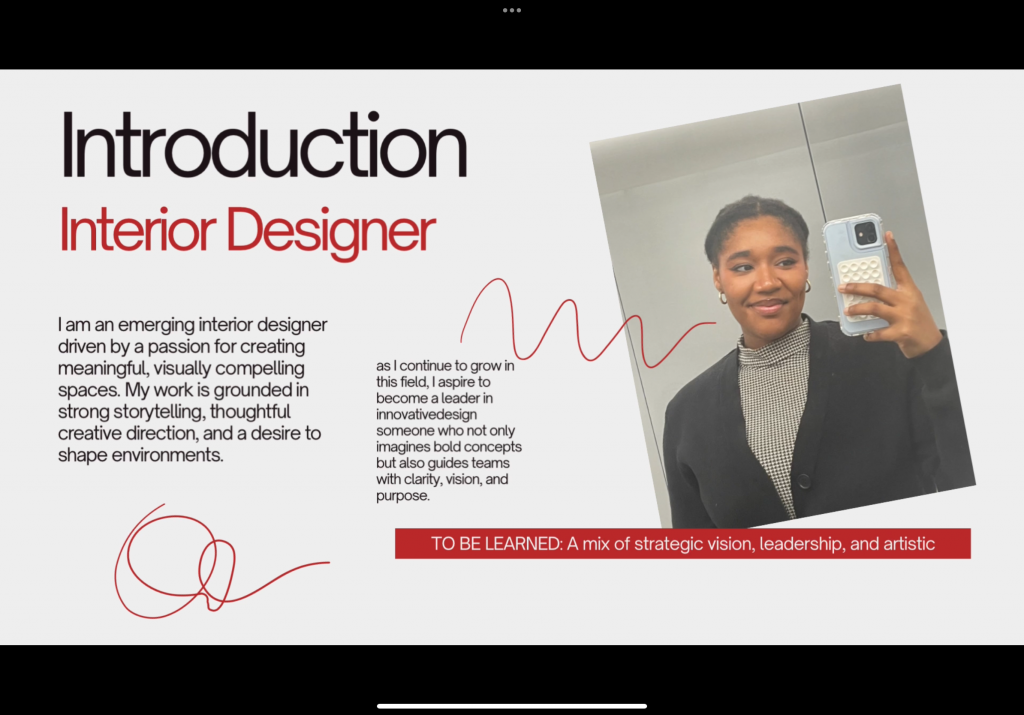
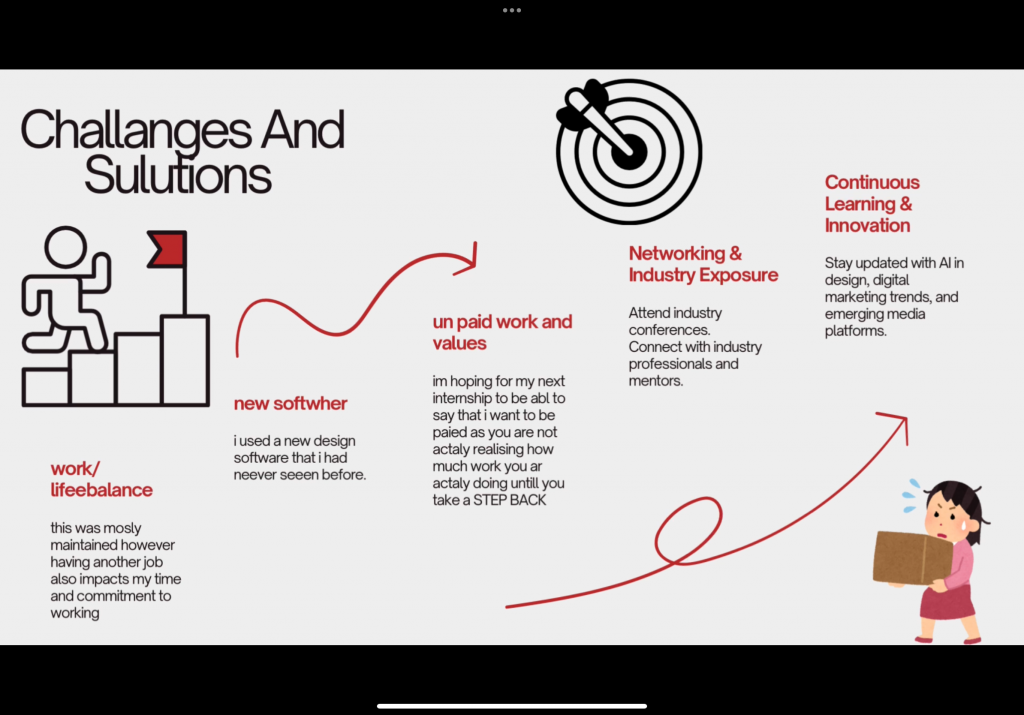
Over the past few weeks, I’ve started to reflect more on my values and what I want to gain from this experience. Even though this internship isn’t paid, I’m trying to focus on the opportunities it gives me to learn and grow as a designer. I really value commitment, professionalism, and creativity. This is because although some may say interior designing is an easy job, it actually takes quite a lot of brain power a knowledge to do what we do
I’ve been putting a lot of effort into every task I’m given, even when it takes up a lot of my free time outside of work. I believe that if I’m contributing to real projects and helping to bring value to the business, that work should eventually be recognised. After a couple of months, once I’ve shown that I can produce high-quality work and manage projects independently, I plan to have a conversation about starting to get paid. It’s not just about the money; it’s about the principle of being fairly compensated for the effort, time, and skill that goes into what I’m creating.
Recently, we went out to discuss clients over coffee and some food, which was a nice change of pace. it important to recenter your self after working long shifts through the week. Moments like that make me feel more part of the team and give me a better insight into the client-facing side of design. Even though it’s an unpaid internship, I appreciate that there are small gestures, like occasionally being treated to food, which make the environment feel welcoming and supportive. It also shows that my mentor values my input and wants to build a positive working relationship. Overall, I’m enjoying the experience and learning a lot about the professional side of interior design, but I’m also beginning to understand my own worth and what I want from future roles, both in terms of creative satisfaction and fair compensation for the work I do.
-
software problems
For my first week, I’ve been getting used to the new software my mentor uses. She works with Foyr, whereas I’ve always used AutoCAD. Foyr is much more user-friendly and visually focused, but since I’m so used to AutoCAD’s tools and shortcuts, it’s taking me a little time to adjust. I’m also slightly worried that if I stop using AutoCAD completely, I’ll forget some of my skills. I need to find a way to balance both maybe doing technical plans in AutoCAD and then using Foyr for the visual design work. Learning to use both programs will definitely be an advantage in the long run, as different clients and projects often require different software. And it’s important to be able to adapt and adjust
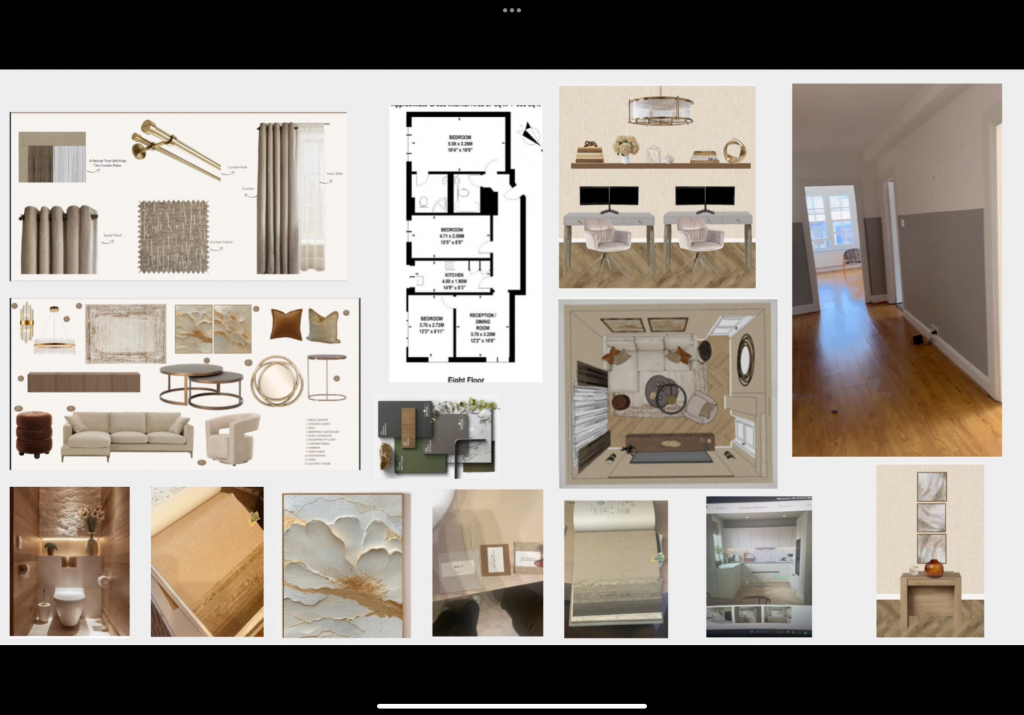
For my first project, I’m working on an which I feel quite confident about since I have a similar setup at home. The main challenge with this space is the limited size, so I need to think carefully about how to make it both functional and comfortable without overcrowding it. I’m also designing a bathroom, which I haven’t started planning yet. It’s a small, awkwardly shaped area, so when I go in today, I’ll be taking photos and experimenting with layouts using her system.
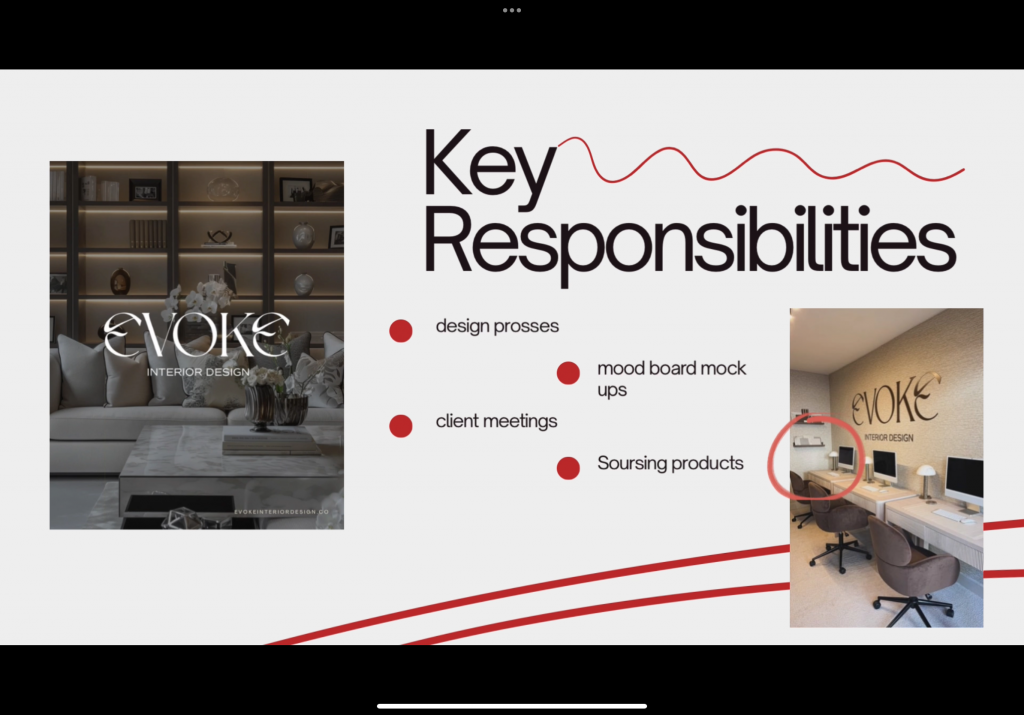
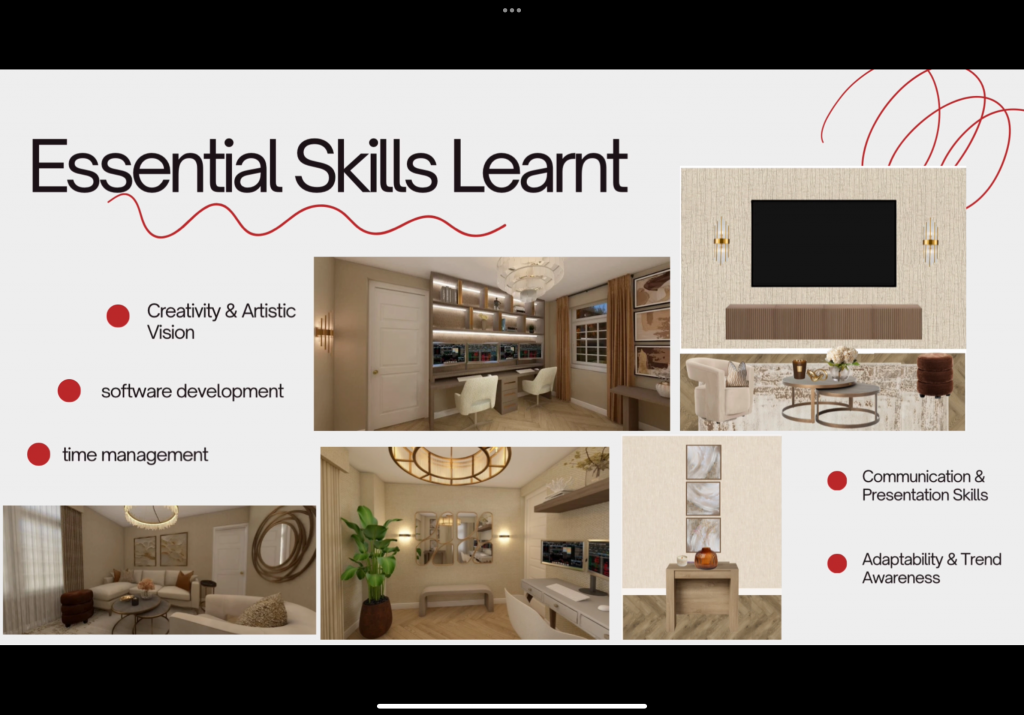
In terms of style, my mentor’s brand is very high–end. Even though she designs spaces like bedrooms, kitchens, and bathrooms, they have a polished, hotel-like look. You can usually picture this kind of style in your head lots of marble, beige, cream, black, and brown tones, with a sophisticated and elegant feel. It’s beautiful and professional, but also somewhat limiting because the colour palette and materials are quite consistent. My personal style is a bit more modern and relaxed, so it’s been interesting learning how to adapt my ideas to fit within her brand’s aesthetic.
-
Small decisions make BIG impacts
Today was a really productive day. I was able to add my input toward a new design, which I wasn’t completely confident about at first, but my mentor really liked my ideas. That gave me a lot of reassurance and motivated me to keep experimenting with her software to recreate the room design. however i did relieve some some constructive point witch threw me off but i kept focused.
I also spent time choosing wallpapers, which turned out to be a lot harder than I expected. You have to make sure every element feels cohesive without being too repetitive. I didn’t realize how difficult it would be to select the right materials, wallpaper, flooring, or furniture because each choice can easily clash with the rest of the design if you’re not careful. I’ve started to see that interior design isn’t just about making things look good, it’s about balancing colours, textures, and budgets while still meeting the client’s expectations.Although my employer liked one of my earlier designs, the client wanted something quite different, so I had to scrap that design and start again from scratch. That was definitely frustrating, especially since I had already spent a lot of time working on it. However, I understand now that this is part of the design process clients often change their minds or have preferences that don’t match your initial ideas. It’s important to stay flexible and learn how to adapt quickly while still keeping your creative input. I also realised how essential it is to know what specific pieces the client wants, such as a particular dining table or lighting style, before starting the design. Without that, it’s easy to go off track or go over budget. Even though it can be challenging, these experiences are helping me develop more professional awareness and problem-solving skills, which I know will be valuable in future projects
-
The start of NOTHING or so i thought
We were originally meant to start the project on October 1st, but the renovation of the area isn’t finished yet, and a few unexpected issues have caused delays. Because of that, my internship was temporarily paused, which has been a little frustrating as I was really eager to get started and gain more hands-on experience. These delays have continued through to October 23rd, so I haven’t been able to visit the site in person. Despite this, my mentor has still been sending me work to complete from home, which I really appreciate. Why is this important? At first i thought i can’t believe i am not foing anything sith my time and i found myself sitting at home doing nothing after a while i goud how un preductive ive been and thats not what i wanted to achieve during my plac
so I’ve been using this time to research bathroom layouts, materials, and design ideas that suit her luxurious, high-end style while still being practical and functional. Even though the progress has been slower than expected, this period has helped me work more independently and understand how much planning and research goes into the early stages of a design project.
Recently, I was given the task of designing a bathroom, which I’m feeling quite nervous about as it’s one of the more challenging projects I’ve had so far. I’ve only just started the initial planning stages by putting together Pinterest boards and mapping out some early concepts for the layout, colour palette, and materials. However, I haven’t physically started creating the design yet because I don’t have any specific measurements or details about the space, and I’m not entirely sure how my mentor wants me to approach it. Without accurate dimensions or a defined brief, it’s difficult to visualise the space correctly, as small details like window placement or door swings can completely affect the layout. Still, I’m using this time to prepare as much as possible so that when the renovations are complete, I can move quickly into the design stage with a clear, well-developed plan that reflects both my ideas and her brand’s aesthetic.
what next
im hoping to get started on this new client and im excited to see the new challenges it will bring to my daily life and productive
-
Hello world!
Welcome to myblog.arts. This is your first post. Edit or delete it, then start blogging!